
Which trends offer opportunities or pose threats on the European fresh fruit and vegetables market?
Europe’s fresh fruit and vegetables market is more and more shaped by a set of connected trends. These include tightened environmental regulations, changing consumer preferences, cost-of-living pressures and technological innovations. Playing into these trends offers opportunities: higher-value niches, deeper buyer partnerships, expanded e-commerce channels and a strong reputation as a sustainable and responsible supplier.
Contents of this page
- Environmental sustainability means more accountability
- Social sustainability – stop human rights violations
- Sustainable sourcing has become mainstream
- Technology is becoming a priority
- Inflation keeps threatening high-value fruit and vegetables
- Geopolitics are affecting trade flows
- Health consciousness triggers clean consumption
- Convenience gains importance
- E-commerce keeps on growing
- Supply chain integration requires partnerships
Sector transformations are based on sustainability and strategic partnerships
The long-term visions of retailers and global produce companies often highlight sustainability as a central priority. 71% of food and drink businesses have emissions reduction targets. Many European companies have accepted sustainability goals to create a more sustainable fresh sector. By 2030, they want to achieve lower pesticide and water use, smaller carbon footprints and more socially responsible labour conditions.
Particularly in Northern and Western Europe, consumers demand higher-quality produce, even during off-season months. This requires more advanced greenhouse farming within Europe, and international suppliers who can supplement seasonal gaps or introduce unique and exotic items that cannot be produced locally. Trade watchers also expect that integrated supply chains will keep growing. Major importers and distributors will develop direct ties with farms and maybe fund improvements in irrigation, energy use and post-harvest technology.
For exporters outside Europe, these forces both pose threats and offer opportunities. Producers who cannot meet sustainability requirements that become more and more strict will lose market access or have to depend on price-sensitive segments with lower margins. However, producers who embrace sustainability, advanced farming techniques, traceability tools and strategic partnerships can earn a place in the European market.
1. Environmental sustainability means more accountability
European consumers and governments focus on accountability in environmental performance now more than ever before. One reason behind this is effects of climate change getting worse and worse. These effects have led to droughts, flooding and record-breaking heat waves. Another reason for the growing focus on accountability is greater consumer awareness, civil society advocacy and new legislation in the European Union (EU). An example of the new rules is the Corporate Sustainability Due Diligence Directive (CSDDD, Directive 2024/1760).
The CSDDD entered into force on 25 July 2024. In February 2026, the European Council adopted a simplified version. The CSDDD now requires large companies to identify and address adverse human rights and environmental impacts in their own operations, their subsidiaries and their chains of activities. There is a focus on areas where risks are most likely. Smaller companies do not have to follow these requirements yet, but buyers may ask them for reasonably available information. Companies have to meet the CSDDD requirements from July 2029.
In practice, this focus on environmental accountability means that there is growing attention for how farmers use water, manage pesticides, handle soil fertility and protect biodiversity. Production that depends on unsustainable irrigation is likely to come under pressure. Using too much fertilisers and plant protection products or not using them in the right way will lead to warnings or rejections. The carbon footprint of logistics is also becoming a topic of discussion.
Video 1: Eosta’s organic rain-grown avocado
Source: @Nature & More on YouTube
Possible impacts on specific crops:
- Avocados in arid regions: these have often been criticised for their high water use. As water usage data becomes more transparent, producing countries that cannot guarantee sustainable irrigation practices may not be able to maintain volumes or get fair prices. Instead, rain-grown avocados may get priority.
- Stone fruits that require heavy irrigation: countries must improve water management. This could mean investing in drip irrigation, rainwater harvesting or new desalination technologies.
- Long-distance air-freighted exotics: with decarbonisation goals, air freight may face rising costs or environmental taxes. This would make shipping by sea, with new long shelf-life varieties or improved reefer solutions, more and more attractive.
The EU has also adopted a new Packaging and Packaging Waste Regulation (PPWR, Regulation 2025/40). This includes restrictions on single-use plastic packaging for pre-packed fruit and vegetables under 1.5 kg, and the requirement to minimise the weight and volume of packaging. This increases buyer interest in packaging reduction and sustainable materials.
High-value certifications verify sustainability
Major retailers and specialised importers often encourage or require suppliers to have sustainability-related certificates. GLOBALG.A.P. IFA (Integrated Farm Assurance) for fruit and vegetables is a global standard that promotes responsible farming practices. Specific environmental criteria are included in add-ons like SPRING (Sustainable Program for Irrigation and Groundwater Use). This add-on helps verify responsible water management at farm level.
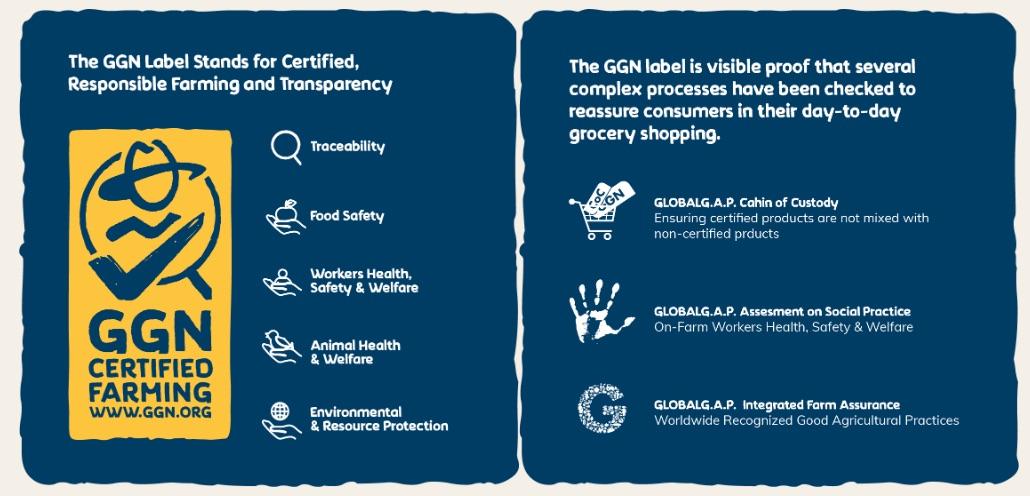
The GGN label is also a consumer label built on GLOBALG.A.P. standards. It proves that products like fresh fruit and vegetables are produced with verified sustainable practices. Their unique identification numbers enable full traceability back to certified farms. This focus on transparency and accountability covers environmental and social aspects. Peruvian fresh fruit exporter Verfrut is an example of a GGN certified company.
Figure 1: Explanation of the GGN certified farming label
Source: GGN, February 2025
New and more general initiatives like B Corp certification measure companies’ social and environmental impact. B Corp might not be widespread in the fresh fruit and vegetables sector ye. But it shows the broader trend of verifying sustainable practices beyond pesticide and water use. One example of a Certified B Corporation in fresh fruit and vegetables is Vitafoods from Chile.
Tips:
- Conduct a thorough environmental impact assessment of your operations. Evaluate your water and pesticide use, carbon footprint and biodiversity impact. You can use online tools like the Farm Carbon Calculator to evaluate your environmental impact.
- Explore technological solutions for precision farming, such as irrigation sensors. Check out best practices and horticulture technology platforms like Australia’s Horticulture Industry Networks and their guideline for irrigation management for stone fruit.
- Partner with NGOs to develop responsible land and water management practices. In the long run, these partnerships can protect your market position.
- Investigate certification schemes beyond the standard GLOBALG.A.P. IFA if you want to build your brand identity around sustainability or reach high-end segments.
- For ideas on how to become more environmentally friendly, read our tips to go green.
2. Social sustainability – stop human rights violations
Fruit and vegetable supply chains can have problematic labour conditions, especially at farm level. Issues like child labour, underpayment and unsafe working conditions are concerns. European buyers worry about reputational damage and legal risk if they are found to source from suppliers linked to human rights abuses.
Legislation is an important driver of change. The CSDDD requires large companies to review their direct business partners for potential labour violations. Large retailers and importers will ask suppliers for proof of good labour practices and risk control. They may also ask for recognised audits like GLOBALG.A.P. GRASP (Risk Assessment on Social Practice) or SMETA (Sedex Members Ethical Trade Audit) to check workers’ health, safety and welfare at farm level.
A related new EU law is the Forced Labour Regulation. From 14 December 2027, products made with forced labour are banned from the EU market, regardless of their origin. This increases buyer pressure for strong labour and supplier recruitment practices. For example, there should be no recruitment fees nor any restrictions on worker freedom. Some EU member states already have laws that require large companies to investigate their supply chains for child or forced labour, like Germany and France.
Fair pricing and living wages
Consumers in wealthier European countries have become more sensitive to the economic wellbeing of farmers and plantation workers. Fairtrade International has long focused on minimum prices and additional premiums for community development. However, interest in broader living wage initiatives is rising. Since 2024, Fairtrade has asked its commercial partners in the banana trade to pay a Fairtrade Living Wage Differential so workers can receive a Fairtrade Banana Bonus. The Rainforest Alliance 2020 standard includes living wage requirements and tools.
Although it is difficult to implement living wage strategies in complex, fragmented supply chains, the conversation has begun. In 2023, Lidl Netherlands closed its share of the wage gap in its banana supply chain by implementing a living wage premium via wages/salaries, vouchers or cash. This benefits more than 10,000 workers at banana plantations in Ecuador, Colombia, the Dominican Republic and Guatemala. Projects like Eosta’s Living Wage Avocados also show how buyers can fund a living wage by charging end customers a small premium per kilogram.
Tips:
- Familiarise yourself with the main social compliance audits, for example GLOBALG.A.P. GRASP, used in the fresh fruit and vegetable sector. A small investment in these systems can open more market opportunities.
- Engage with employees and local communities to identify gaps in working conditions. Improving labour practices often starts with understanding the specific context and needs.
- Communicate with importers openly. Show your efforts by raising wages, improving safety and preventing child and forced labour, and keeping basic records to prove everything. Transparency can give you a competitive advantage over suppliers that pay less attention to social matters.
- Keep an eye on developments in living wage pilot projects, like Dutch supermarkets’ Banana Retail Commitment on Living Wage.
- For ideas on how to include social responsibility in your business strategy, check CBI’s tips to become socially responsible.
3. Sustainable sourcing has become mainstream
Although environmental accountability and social responsibility both reflect broader sustainability concerns, the notion of ‘sustainable sourcing’ itself has become a standard part of many buyer negotiations. Ten years ago, the idea of sustainable or ‘green’ produce was still quite niche, often limited to the organic segment. Nowadays, mainstream supermarkets across Europe have entire departments dedicated to sustainability strategies.
Retailers like Carrefour (France), Coop (Switzerland), REWE (Germany), Ahold Delhaize (the Netherlands) and Waitrose (UK) include sustainability metrics in their supplier evaluations. They look at water use, carbon footprints, packaging materials, the presence of child labour and how to provide incentives to suppliers. REWE, for example, plans to introduce an early payment solution with sustainability incentives in cooperation with Taulia.
Membership groups also help to align approaches across the sector. SIFAV (Sustainability Initiative Fruit and Vegetables) brings together retailers, traders and NGOs to unify approaches. SIFAV’s goals include reducing carbon footprints, food loss and water use. Its social programme includes decent labour conditions and living wages. These targets are integrated into supply agreements. This means you need to meet them to keep or build business relationships.
Companies in the middle of the supply chain (importers, packers and ripeners) also face these expectations from retailers. They often ask suppliers for better data, clearer risk management and evidence of continuous improvement. Some have even set up dedicated farmland or partnered with local producers to take control of processes directly.
Local sourcing and seasonal eating
Thanks to sustainability, local sourcing and seasonal eating have become more popular among European consumers. During the Covid-19 pandemic, buying local products supported local businesses and minimised vulnerability to global disruptions. Many retailers and food service companies highlight local produce, especially during peak seasons.
European retailers that run ‘local products first’ programmes include Migros from Switzerland with ‘From the region, for the region’, German REWE with ‘REWE Regional’, French E.Leclerc with ‘Our regions have talent’ and Dutch Jumbo with ‘Products from Close By’. Some have a dedicated portal where small local companies can apply to become suppliers, such as Sweden’s ICA Order Portal for Local Suppliers.
When local produce is out of season, retailers still need overseas suppliers. However, they may prefer to source from areas closer to them, like North Africa or Southeastern Europe, to control logistical costs and reduce carbon emissions.
Exporters further away from Europe can still succeed, especially if they supply tropical or exotic items that cannot be grown in Europe. However, they need to be able to explain how the product was grown and transported. Major shipping lines and logistics providers also experiment with greener solutions, such as by using biofuel blends for ocean freight. Using lower-emission options can support your story and offer a competitive advantage.
Tips:
- Learn from European retailers’ supplier evaluation reports and standards, like Migros’ supplier evaluation report, Ahold Delhaize’s Guidance Document on the Standards of Engagement and from other initiatives that encourage suppliers to improve their ESG performance.
- If your production is located far from Europe, ask your logistics partners about lower-emission freight options and highlight your unique value. This can be a distinctive flavour, a climate that enables year-round supply or a heritage product with cultural significance. One good example is the Indian Alphonso mango, which has protected Geographical Indication (GI) status.
- Investigate membership in multi-stakeholder initiatives like SIFAV. This can help you understand and adopt best practices for water, carbon and social standards.
- Stay informed about European production cycles for fruit and vegetables. For example, check Figure 6 in our fresh fruit and vegetables demand study. Identify when European demand for imports is higher, then position your marketing accordingly.
- Study European and overseas availability with tools like the IPD calendar. Plan exports around local seasons to avoid competition.
4. Technology is becoming a priority
As competition grows and requirements intensify, Europe’s fresh trade invests heavily in technology. From fields to ports, and from warehouses to consumers’ doorsteps. High labour costs, labour shortages and consumer demands for consistent quality push businesses towards automation and data-driven solutions. Technology can also reduce water and pesticide use and cut food losses. This supports sustainability targets and lowers costs.
Precision farming and data-driven decisions
Precision agriculture is transforming production all over the world. By collecting real-time field data on weather, soil composition, pests and plant health, farmers can minimise inputs like water and pesticides while maximising yields. Advanced tools like drones and AI-driven analytics may seem out of reach for smallholder farmers. But simpler versions (like moisture sensors or basic weather stations) are more and more affordable. These tools often improve yields and quality, making exports more competitive.
Post-harvest tech
Advanced post-harvest technology and maintaining the cold chain are crucial to preserving the freshness of produce exported to Europe. Technological solutions that serve these objectives include:
- Automated sorting and grading lines: Cameras with machine learning can detect defects and sort produce by size and ripeness.
- Smart reefer containers: These can remotely monitor and adjust temperature and humidity. For sensitive fruit and vegetables, controlled-atmosphere reefers can also help manage oxygen and carbon dioxide levels to slow ripening and extend shelf life.
- Smart transport packaging solutions: These keep fresh fruit and vegetables in better condition.
Video 2: Perfotec’s LinerBag smart packaging for transport and storage of fruits and vegetables
Source: @PerfoTec on YouTube
Suppliers should invest carefully
Investments in technology can improve your reputation with European buyers. Reliable data on temperature logs, pesticide use and yields increases trust and can help you stand out from your competitors. The EU’s General Food Law (Regulation (EC) No 178/2002) requires traceability throughout the food chain. Digital records, batch codes and shipment logs can make this easier and faster when buyers or authorities ask for proof. Digital traceability platforms allow you to share data with importers in a structured way.
However, adopting technology requires careful analysis in terms of return-on-investment. Exporters with small production volumes need to ensure that new equipment or software pays off. Also: once you have invested in digital tools, training staff to use the digital tools is essential. A partial solution may fail if employees do not understand or trust it.
Tips:
- Read CBI’s tips to go digital in the fresh fruit and vegetable sector to learn what technologies are accessible and useful for your company.
- Look for technology that suits your farm size and budget. A small moisture sensor system might be more practical than a full-scale drone fleet.
- Work with local universities, NGOs or extension services that support digital transformation in agriculture. They can provide guidance or trial programmes for new tech.
- Consider joint investments with buyers, especially if the buyer wants consistent volumes that justify advanced monitoring or automation.
- Use digital traceability platforms, such as TransGenie. This can streamline negotiations and inspire loyalty. GS1’s Fresh Fruit and Vegetable Traceability Guideline includes information on roles, important data to capture and how to share it with trading partners.
5. Inflation keeps threatening high-value fruit and vegetables
Rising inflation and economic uncertainties in Europe have made many European consumers more price-sensitive. Food inflation soared in 2022 and 2023, sometimes surpassing general inflation. Since then, inflation has eased, but it keeps pressure on household budgets. While fruit and vegetables are essential for consumers, categories like high-value exotics and premium organic produce are more vulnerable to cutbacks.
Costs have also risen throughout the supply chain. Fertilisers, packaging, energy, labour and logistics have all become more expensive. Various factors have contributed to this, from the war in Ukraine to the lingering impacts of the Covid-19 pandemic. Even though container shipping rates have gone down from their peak in 2022, they are still above pre-pandemic averages and change quickly.
Continued pressure on household budgets
Fruit and vegetables are still essential items in the shopping basket. However, higher-value categories like tropical exotics, premium organics and specialist imports are more likely to face slower sales or price pressure. While some regions of Europe have seen an increase in wages, many households still feel the impact of the increased cost of living. Price is the main barrier to eating more fruits and vegetables.
As a result, households with tighter budgets tend to ‘trade down’ from premium or organic labels and buy cheaper products. Discounters like Aldi and Lidl benefit from this trend, offering price promotions and own-label alternatives. At the same time, wealthier consumers are still willing to pay for better quality and distinct eating experiences (sustainability, unique flavours, proven health benefits). Many supermarkets have responded by trying to keep prices competitive for the mass market while keeping premium lines for wealthier segments.
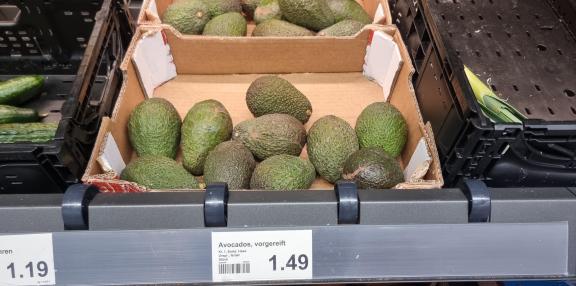
Figure 2: Ready-to-eat Hass avocado at Aldi in Germany, February 2025
Source: GloballyCool, February 2025
Most predictions suggest the European cost of living will continue to ease slowly, but not enough to eliminate the financial pressure on middle-income households. This means high-value fruits and vegetables will likely retain a small yet stable share. Discount retailers, meanwhile, will further expand their market presence. If you emphasise consistent quality, sustainability and clear traceability, you can still appeal to the premium niche. At the same time, cost efficiency and competitive pricing will remain critical to secure mainstream and budget-segment sales.
Implications for suppliers from developing countries
In a price-sensitive market, streamlining operations is critical. Exporters must optimise production, reduce losses through better post-harvest handling, and ensure that shipments meet buyers’ expectations. Working capital management is also crucial, as delays in customs or payments from importers can cause problems.
Further impact depends on your products and capacities:
- High-value or niche fruits: Mangos, avocados, berries and certain tropical specialities often come at higher price points. These products can experience slower turnover or downward price pressure.
- Organic produce: While organic remains a growing segment in the long term, short-term price hikes can dampen sales, making it tougher for producers who rely on premium price differentials.
- Private label lines: Retailers may focus on private-label items, which can be priced lower. This can create opportunities for cost-efficient producers who can scale to meet private-label volumes.
Tips:
- Be proactive with cost management. Evaluate your supply chain from field to port to identify inefficiencies and cut avoidable costs, such as waste, rejects, redundant packaging and gaps in the cold chain.
- Focus on reliability and quality. Retailers that see your product as consistent and trouble-free may come to prefer your produce, even if there are cheaper options.
- Diversify where possible. If you normally only supply premium lines, consider adding some mid-range options to provide a buffer against shrinking demand at the high end.
- Monitor macroeconomic indicators in your target markets, such as unemployment, disposable income levels and inflation data. This helps you anticipate consumer shifts. Use resources like the Eurostat harmonised index of consumer prices and the European Central Bank Economic Bulletin.
6. Geopolitics are affecting trade flows
Europe’s fresh produce market is closely linked to global supply chains. However, geopolitical events can disrupt routes and force companies to change suppliers. The war in Ukraine, the effects of Brexit and more protectionist thinking keep putting pressure on producers and traders. Security risks in important sea routes, such as the Red Sea, can also cause delays and higher freight costs.
War in Ukraine and reduced trade with Russia
Before the conflict, various suppliers in Eastern Europe and Central Asia exported fruit and vegetables to Russia and Ukraine. Now, with sanctions and logistical challenges, many have started to look to Western Europe for alternative markets. At the same time, shipping through Black Sea ports has become less predictable, leading to trade flows being rerouted.
Competition in Western Europe has intensified for certain products that used to be sent to Russia. This can drive prices down or push suppliers to set themselves apart through higher quality, traceability or certification.
Brexit’s long tail
The United Kingdom (UK) remains a important consumer market in Europe. Historically, it imported large volumes of fruit and vegetables via the Netherlands and other EU countries. However, Brexit introduced new customs checks, documentation requirements, and product standards. Consequently, imports from the EU dropped from 3.2 million tonnes in 2019 to 2.4 million tonnes in 2021.
However, the UK’s border approach is changing. The country planned to start routine border checks and fees for ‘medium-risk’ fruit and vegetables coming from the EU. In 2024, it extended the delay. In June 2025, the UK government said it would continue to allow ‘medium-risk’ fruit and vegetables from the EU to enter without routine border checks or fees until 31 January 2027, while it works towards a UK-EU sanitary and phytosanitary (SPS) deal. Meanwhile, the UK is also closing trade deals with non-EU countries such as Madagascar.
Tips:
- Keep track of changes in trade policies, import duties and inspections. Check Access2Markets (European Commission) and the UK government’s official guidance for up-to-date procedures.
- Investigate direct shipping routes to the UK if the cost or complexity of routing via the EU is too high. London Gateway Port is the main reefer terminal in the UK.
- Make your product stand out if you are facing new competition. This can mean offering organic or other certifications, ensuring superior taste, or emphasising sustainable practices.
- Prepare for future disruptions and diversify your geographic market portfolio as much as possible. Trade corridors can move quickly if security risks rise or rules change.
7. Health consciousness triggers clean consumption
European consumers are very health conscious. They focus on a healthier lifestyle more and more, which includes improving eating habits. About 60% of EU consumers actively try to eat healthily, and 77% regularly eat fruit and vegetables. 81% of Europeans would like to consume more fruits and vegetables. Food safety is an important factor for EU consumers when buying food, especially when it comes to pesticide residues and additives.
Consumers seek to reduce their consumption of processed foods and artificial additives and preservatives. In line with this trend, vegetables are often used to replace carbohydrates. For example, courgette spaghetti (or ‘courgetti’) and cauliflower ‘rice’ are used instead of wheat-based pasta and rice.
With rising obesity rates and related diseases, national health authorities also encourage fruit and vegetable intake. This has a direct impact on demand, although the specifics vary depending on the market segment.
Clean labels and minimal processing
Europeans have long viewed fruit and vegetables as essential for a balanced diet. However, health consciousness has changed to a broader idea of ‘clean eating’. Consumers want low pesticide residue levels, but they also look at how produce is grown, processed and packaged. The idea of ‘clean labels’ means fewer artificial additives, less chemical input and greater transparency. Although fresh fruit and vegetables are basically unprocessed, consumers often worry about synthetic post‑harvest treatments or waxes used to extend shelf life.
Organic products have grown in popularity partly because they align with these consumer ideals. Even though inflation can slow organic market growth (as seen in 2022–2023), the long-term trend is still upward. Organic fresh produce market shares are higher in Denmark, Germany and Sweden. Italy and Poland have smaller but rapidly growing organic segments.
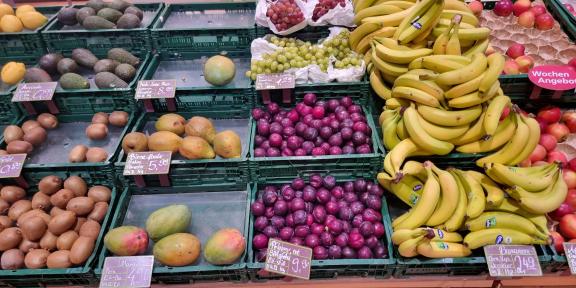
Figure 3: Fresh fruits and vegetables at German organic supermarket Alnatura
Source: GloballyCool, February 2025
Hybrid consumption supports ‘clean’ premium choices
Many consumers now mix affordable staples for everyday meals with premium, ethical and flavour-exploration items to enhance their dining experience. This supports demand for small premium purchases that still feel healthy and clean. In 2024, similar shares of European shoppers traded up and traded down, which shows this hybrid consumer behaviour. For SMEs like you, this can mean offering both a good-value line and a smaller premium line, if you can keep quality stable.
Younger consumers like to experiment with new flavours and food experiences. They often discover new flavours through social media. Research found that 70% of Gen Z use social media platforms like TikTok for food inspiration. This can help exotic and health-conscious fruits and vegetables, such as hybrid fruits. These niche products can become mainstream, similar to the success of avocados in Europe.
Speciality health niches
Nutrient content is an important factor for EU consumers when buying food. Some fruits have become popular as ‘superfoods’ thanks to their high vitamin, antioxidant or fibre contents. Examples include blueberries, raspberries, goji berries, pomegranates, ginger and turmeric. Marketing these products with health claims is difficult because EU Regulation (EC) No 1924/2006only allows authorised claims. However, consumers with disposable income are willing to pay more for superfoods, particularly in Northern and Western Europe.
Another emerging niche is the plant-based movement. 64% of Europeans would like a more plant-based diet in the future, with more fruit, vegetables and grains. The rise of vegan and flexitarian diets has boosted interest in plant-based proteins and meat substitutes made from vegetables, like peas and mushrooms. Vegetables can also serve as an alternative to meat (like pumpkins) and as an ingredient in vegetable burgers (like spinach). Exporters who supply raw materials for these products can engage with specialised manufacturers and supermarket lines.
Tips:
- Emphasise natural production and minimal chemical use. Invest in integrated pest management (IPM) or organic farming if you can.
- Check the European Commission’s Nutrition and Health Claims database if you wish to make health-related statements.
- If you supply niche superfoods, be consistent about quality. Consumers paying a premium for health benefits expect near-perfect product appearance and high nutritional value.
- Maintain strong relationships with importers who serve the organic retail segment and specialised health stores. Niche distribution channels often prefer stable, long-term collaboration with reliable suppliers. For an idea of the opportunities in the plant-based market, explore which supermarkets are shifting their product offerings toward more plant-rich diets.
- Engage in marketing that tells a story about flavour, aroma or unique textures. Hybrid consumers want to feel like they are discovering something special. For example, check out this Mavuno Kenya promotional page about passion fruit.
8. Convenience gains importance
The need for convenience is a barrier to eating more fruit and vegetables. The modern European lifestyle often leaves consumers with little time to prepare meals from scratch. As a result, demand is growing for products that save time and effort in the kitchen. For fruit and vegetables, this can include ready-to-eat avocados and mangos, pre-washed salad mixes, pre-cut fruit and single-portion packs of snack vegetables. The packaging of this convenience food must comply with European legislation on packaging and packaging waste.
Rising interest in healthy snacking
Smaller portion sizes and snack-oriented products are popular amongst European consumers who want healthy alternatives to potato crisps. This is visible in the availability of products like mini-carrots, bite-sized cucumbers and small containers of blueberries. The idea of fruit and vegetables as snacks has settled, especially in countries with higher disposable incomes, like the Netherlands, Denmark and Germany.
Retailers driving the convenience market
Major supermarket chains in Western Europe have innovated extensively in convenience food. They offer fresh-cut fruit cups, meal kits, fresh-cut vegetables and small containers of snack vegetables for busy lifestyles. As online shopping grows, convenience products also fit well with platforms that deliver groceries. These items often have higher margins, encouraging retailers and processors to develop more lines that meet the demand for convenience.
For suppliers of tropical fruits like mango and pineapple, the convenience trend presents opportunities and challenges. On the one hand, providing ready-to-eat or fresh-cut products at the source can capture more value and open direct relationships with retailers that want to differentiate. For example, Blue Skies has pre-cut and packaging facilities for pineapple, mango, pomegranate, melon and more in Ghana, Egypt, South Africa, Brazil and the UK.
On the other hand, fresh-cut products require strict cold‑chain logistics, special packaging and compliance with microbiological safety rules. Any slip-ups in temperature control can cause quick deterioration, leading to major losses. Fresh-cut operations at origin can also result in quite a large carbon footprint if air freight is used.
Packaging and Packaging Waste Regulation
Convenience food is often pre-packed, and its packaging must comply with European legislation.
From 1 January 2030, the EU’s PPWR requires plastic packaging to:
- Use the minimum weight and volume needed to protect the product and handle it safely;
- Be recyclable in an economically viable way; and
- Contain minimum amounts of post-consumer recycled plastic.
PFAS will be banned from packaging from August 2026.
The PPWR also bans single-use plastic packaging for packages of pre-packed, unprocessed fresh fruit and vegetables weighing 1.5 kg and less, as of 1 January 2030. This includes plastic nets, bags, trays and containers. Alternatives include cardboard trays, sleeves, bands, and innovative biodegradable cellulose films and packaging.
EU countries may allow exemptions if there is a proven need to prevent:
- Water loss;
- Loss of firmness (turgidity);
- Microbiological hazards;
- Physical shocks;
- Oxidation; or
- Organic produce mixing with non-organic produce.
This ban does not apply to fresh-cut fruit and vegetables because they are not ‘unprocessed’. However, their packaging does need to meet PPWR rules on weight, volume, recyclability, recycled content and the PFAS ban.
Tips:
- Evaluate whether you have the infrastructure and expertise to process fruits and vegetables at origin. If not, consider partial processing, such as sorting, washing or pre-cooling, leaving the final slicing and packing to a European partner.
- Ensure your product’s shelf life and appearance remain good despite extra handling steps. Conduct thorough quality trials to find the best packaging, shipping temperatures and post-harvest treatments.
- Explore strategic relationships with companies that specialise in ripening or fresh-cut processing. You can access higher-value segments by aligning with their schedules and standards.
- Monitor new packaging technologies that comply with the PPWR, such as cardboard trays or punnets, sleeves, bands, biodegradable cellulose films and other recyclable or low-material formats.
- Ask your buyers which pack formats they will accept for 2026–2030, and what they want by 2030. You should also prepare a simple ‘pack spec sheet’ for each product so your importer can check compliance.
9. E-commerce keeps on growing
Online grocery shopping in Europe is getting more popular. Physical stores are still largest, but e-commerce is no longer niche. In 2024, about 11% of people in the EU bought food/beverages online from stores or meal-kit providers (in the previous 3 months). From 3.61% in Croatia to 24.45% in the Netherlands. In the UK, online grocery shopping took a 12.3% market share in February 2025 compared with 8.6% in February 2020.
Several leading platforms and retailers now operate hybrid models, combining click-and-collect services, home delivery and in-store shopping.
There are roughly 4 models of online grocery shopping:
- Conventional supermarkets: Chains like Tesco (UK), Albert Heijn (Netherlands), Carrefour (France) and Edeka (Germany) integrate e-commerce into their main business. Shoppers can order online for delivery or pick-up at the store.
- Pure online players: These companies have no physical outlets but rely on centralised warehouses and delivery vehicles. They often highlight fresh produce quality as a core advantage. Examples include Picnic (active in the Netherlands, Germany and France), Ocado in the UK and Everli in Italy.
- Subscription meal kits or fruit and vegetable boxes: Meal-kit providers like HelloFresh and Gousto supply fresh produce in pre-measured portions. British Abel & Cole is a fresh produce box provider.
- Marketplaces and mixed models: Platforms and retailers work together. For example, in the Netherlands, consumers can order groceries from SPAR City, Flink and Amazing Oriental through Thuisbezorgd.nl. Elsewhere in Europe, Amazon offers grocery and fresh delivery in selected areas across Europe through partners like Morrisons (UK) and Knuspr (Germany). Carrefour sells groceries through Deliveroo in France, Belgium, Italy and Spain.
Online sellers prioritise consistent appearance and extended shelf life because online customers cannot select individual pieces of fruit or vegetables. Instead, they rely on photos and product descriptions. If an e-grocer delivers poor-quality produce, consumers may switch to another platform. This leads online platforms to work closely with suppliers that can meet strict quality criteria and maintain perfect cold-chain management.
The digital environment also allows for direct consumer feedback, complaints and refunds. Reviews and ratings can affect product demand. This can present opportunities for reliable suppliers and varieties (unless the platform specialises in unique or exotic offerings).
Opportunities to differentiate online
Some retailers are open to marketing stories about origin, farmers and sustainability. A small but growing number of European importers provide supplier information with product details and farm biographies. This can appeal to consumers who want deeper insights.
Eosta’s Nature & More label showcases detailed grower profiles from countries such as Ghana, South Africa, Peru and Burkina Faso. Every farm and cooperative has an online “passport” with information about its sustainability journey, community impact and agricultural practices. QR codes on produce packaging can link directly to these farmer stories. In December 2024, Eosta launched rain-grown avocados from Kenya and Tanzania under this label to help fight excessive water use in avocado production.
Fairtrade and cooperative models can also support online storytelling. For example, Banelino is a Fairtrade-certified cooperative of small-scale banana farmers in the Dominican Republic. It exports bananas to Europe, mainly through Fairtrade channels. Retailers and e-commerce platforms like Abel & Cole spotlight Banelino’s community initiatives, education programmes and focus on sustainable farming methods as part of their fair-trade product listings.
Tips:
- Develop strong relationships with importers and local distribution partners that handle e-commerce accounts. These partners must manage near-perfect packing and distribution.
- Provide excellent photos, product descriptions and traceability data. E-retailers use digital platforms that highlight the story behind the produce.
- Use protective and innovative packaging that can withstand home-delivery handling. This might differ from standard supermarket packaging.
- Monitor consumer reviews or importer feedback, when possible. Resolve quality issues quickly, as negative feedback can spread quickly.
10. Supply chain integration requires partnerships
This trend connects many of the previous points: stronger integration in the supply chain is often achieved through long-term partnerships. The European market demands strict traceability, consistent quality, sustainability and year-round availability. This means stand-alone exporters find it harder to do well without forming deeper relationships.
Importers have become service providers
More and more importers act as service providers. Many have advanced ripening facilities, packaging operations and quality labs. They offer retailers “one-stop” solutions. Working with them can be beneficial for exporters, but these importers prefer suppliers that can deliver stable volumes and meet high standards. If you are a small exporter, forming alliances with other producers or joining a producer association can help achieve scale.
Joint ventures and specialised sourcing platforms
There is also growth in specialised sourcing companies that own farmland overseas or form joint ventures with local producers. By doing so, they mitigate supply risks, ensure compliance with European standards and keep a closer eye on farm practices. Examples include African and Latin American production sites that are partially owned by European importers. These integrated models often lead to stable markets, although they can limit smaller, independent exporters who cannot match the scale or meet necessary conditions.
The advantages of partnerships for suppliers from developing countries are varied:
- Better market visibility: Working closely with importers helps you predict demand and plan production, minimising surpluses or shortages.
- Easier investment: Partnerships can facilitate access to finance, equipment and expertise that would otherwise be impossible.
- Risk reduction: Long-term contracts may protect against price volatility. They also encourage open communication, so problems like shipping delays and pest outbreaks can be managed together.
- Deeper branding possibilities: Partnerships allow co-branding and storytelling from farm to shelf. This can make the produce more appealing to consumers and lead to higher rewards.
Tips:
- Identify potential strategic partners by attending major industry fairs like Fruit Logistica (Berlin) and Fruit Attraction (Madrid). Find out who wants direct farm relationships or has expanded operations in your region.
- If you are small, consider forming a regional alliance with other growers to combine volumes and share certifications as much as possible. This can attract bigger clients.
- Be transparent about your strengths and weaknesses. Partnerships work best when both sides share real numbers, production challenges and future ambitions.
- Plan for the long term. Quick one-off deals rarely justify major investments or technology adoption. A multi-year contract or a robust partnership can.
GloballyCool carried out this study for CBI.
Please review our market information disclaimer.
Search
Enter search terms to find market research
Do you have questions about this research?
Requirements regarding the climate and living wages are super important. These costs must be covered in the price paid to fruit producers. This is a financial contribution with a return on investment: more security in food supply.

Karen Bouwsma, senior policy advisor at Fairtrade Nederland